Saturday, 16 March 2019

Fuerteventura Day 4: Southern Sibe

After a busy first few days to our trip, we fancied our fourth day being a bit more relaxed. We spent the morning at Faro de Toston just north of our apartment in El Cotillo.

It was the most productive site for waders we visited during the week, with over 60 Ringed Plover and 20 Kentish Plover on the various small beaches. Other waders were 3 Whimbrel, a Grey Plover, 2 Turnstone, 5 Common Sandpiper and 3 Dunlin. Some showy Berthelot's Pipits were around the point, along with 2 Trumpeter Finches and 4 Sandwich Terns.

For the afternoon we drove to the Fimapaire Valley, just east of La Oliva. We didn't expect very much here but had a nice surprise when I found a Yellow-browed Warbler in a small patch of willows in the west end of the valley. A flock of 40+ Spanish Sparrows and several Hoopoes were also in the willows.

The valley was good for Laughing Doves with several flying around the various goat farms. Southern Grey Shrikes were easy to see and flyovers included an Egyptian Vulture, Ruddy Shelduck and a group of 11 Pallid Swifts.


Yellow-browed Warbler

Southern Grey Shrikes - adult and juvenile
Berthelot's Pipit
Kentish Plover
Common Sandpiper
Laughing Dove
Barbary Ground Squirrel
Yellow-browed Warbler habitat

Sunday, 10 March 2019

Fuerteventura: Day 3 - Tindaya Plains

On our third day on Fuerteventura we made the short journey south from El Cotillo to Tindaya Plains. This is possibly the best site on the island to catch up with the desert specialities, and on our first visit we definitely were not disappointed.

The key to viewing at this location is to slowly drive along the tracks in the car, scanning every so often. The birds can then often be seen at close quarters from the car. Once we arrived it wasn't long until we spotted a pair of Stone-curlews sat just metres from the track. They were totally unfazed by us despite the incredibly close range. We were treated to our best views of the species by a long way!

We continued west along the main track, and quickly picked up a group of four Houbara Bustards. One female cam particularly close. Berthelot's Pipits and Lesser Short-toed Larks were both present in good numbers across the plains.

We reached a crossroads, and here we located a loose group of very smart Cream-coloured Coursers numbering six in total, including two juveniles. This was also a particularly good place to see Lesser Short-toed Larks.

The track continues all the way down to the coast (although deteriorates and is almost impassible in places) and we decided to drive down its full length. We saw a total of five more Houbara Bustards including one which flew past the car and another which just sat preening close by. Our first two Black-bellied Sandgrouse of the trip flew over too along with a Ruddy Shelduck.

On reaching the end of the road, we had a look offshore where around ten Cory's Shearwaters were milling around and nineteen Gannets flew past north. A Barbary Falcon flew over our heads here.

Encouraged by our success here, we decided to head back to Barranco de Rio Cabras for another go at seeing the Dwarf Bittern. Again there was no sign, but I did find a Spotted Crake under the tamarisks and a Greenshank was also new, along with most of the birds on my previous post.


Houbara Bustards (ssp. fuertaventurae)


Lesser Short-toed Lark (ssp. polatzeki)
Cream-coloured Courser - I was after more photos later in the week!


Stone-curlews (ssp. insularum)
Black-bellied Sandgrouse
Berthelot's Pipit in the only ten minutes of rain during the trip!
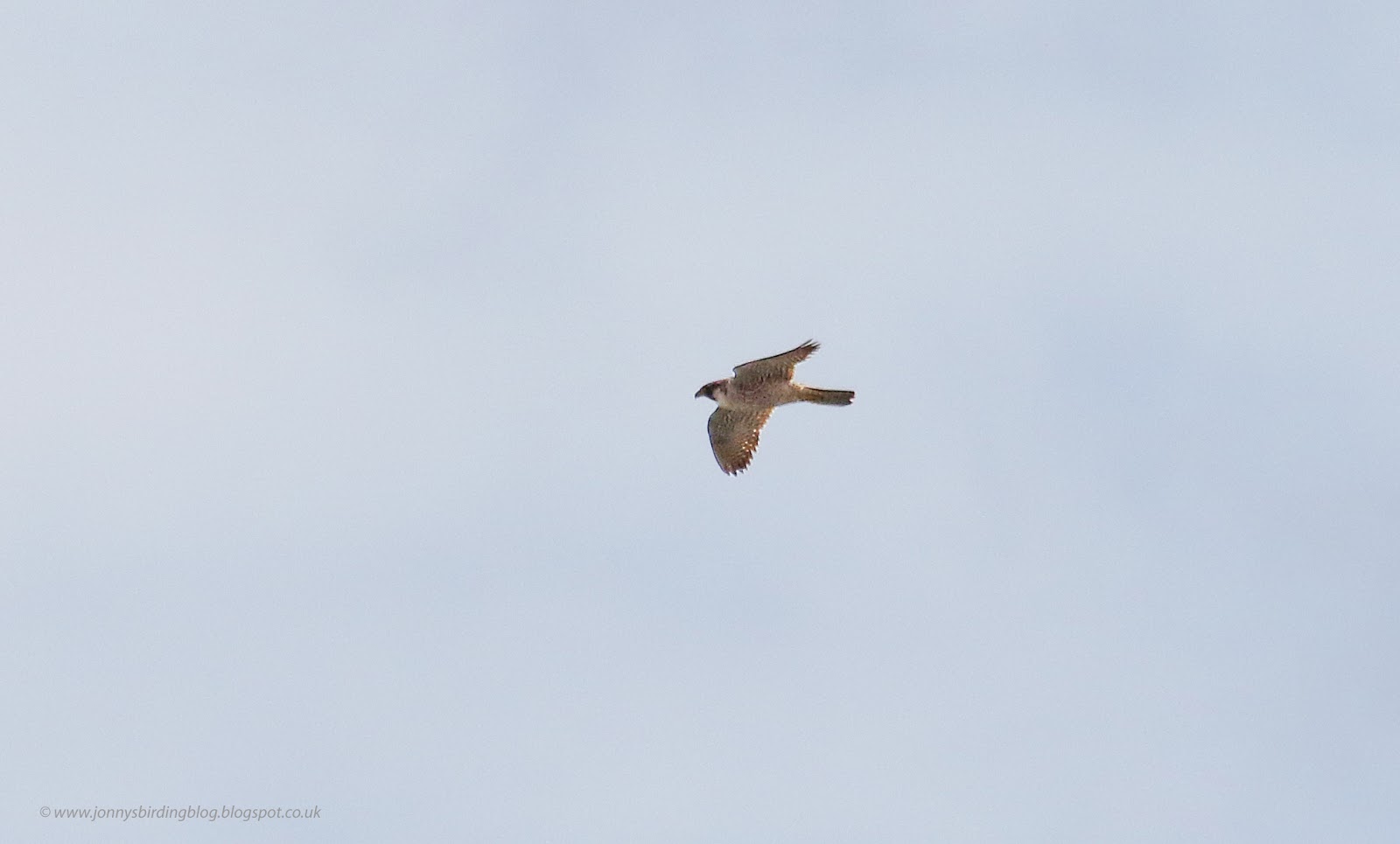
Barbary Falcon
Spotted Crake
Little Ringed Plover

Tuesday, 5 March 2019

Fuerteventura: Days 1 & 2.

The week before last, me and my dad headed south to have a week's birding on the island of Fuerteventura. We had a superb week, managing to catch up with all of our targets, often getting fantastic views too. I am slowly going through my photos, and over the next few weeks I will be putting them on my blog along with a brief account of the days birding...

We flew out on Saturday the 16th of February and arrived early afternoon. After picking up a hire car, we drove to the town of El Cotillo which would be our base for the week. This drive did prove productive and our first tick come almost immediately with a couple of Plain Swift nicely lit as they flew next to the road. These would prove to be our only Plain Swifts of the trip. Two Canary Islands Stonechats and a Laughing Dove were also notable flybys on our drive from the airport.

Once we arrived at our apartment we had a bit of trouble getting in, so decided to have a walk on the beach we it looked onto. A couple of Common Sandpipers were feeding among the rocks as well a Redshank and twos of Turnstone and Whimbrel. A Barbary Falcon gave a brief flyby, but unfortunately too fast for photos.

As we headed back to the apartment, we looked up to see a pair of Southern Grey Shrikes sat on the roof, while Spanish Sparrows were also obvious.

Day 2

On our second day, we spent a really enjoyable eight hours at Barranco de Rio Cabras, seeing a great selection of birds around the water ad scrubby areas, although we did fail to find the Dwarf Bittern. Before we arrived, we also had a couple of Houbara Bustards by the FV-30 near La Oliva.

The water had attracted a few waders with ten Black-winged Stilts, a Snipe, Green Sandpiper and two Little Ringed Plover. Three Little Egrets and a Spoonbill were also on the grassy bank, and twelve Ruddy Shelduck included a brood of eight ducklings.

Birds around the scrub on the bottom and walls of the barranco included several pairs of Canary Island Stonechats, a party of four African Blue Tits, at least fifteen Trumpeter Finches, some Spectacled Warblers and good numbers of Berthelot's Pipits, Spanish Sparrows and Hoopoes. A few Laughing Doves were also flying around the barranco floor.

As we walked back to the car, eleven Egyptian Vultures were circling overhead with Yellow-legged Gulls and Common Buzzards, while a few Lesser Short-toed Larks were also singing from an area of low scrub.

Non-avian sightings included a Monarch butterfly and Barbary Ground Squirrels, while odonata was represented by Scarlet Darters, Epaulet Skimmers, Blue Emperors and Sahara Bluetails.


Canary Islands Stonechats - male, females and juvenile
Ruddy Shelduck


Egyptian Vultures - adult and immature
Common Buzzard ssp. insularum
Spoonbill
African Blue Tit
Scarlet Darter
Sahara Bluetail

Sunday, 3 February 2019

Firecrest

Firecrest - the highlight of a frustrating day at Fishburn
Chiffchaff

Saturday, 19 January 2019

A good day up north...

We fancied some sea birding and the calm, grey conditions encouraged us to head up to the north of the county. For a change we tried Holy Island to start with, and were surprised to see 3 Red-necked Grebes scattered around just off the harbour. I can't remember ever seeing three in a day before let alone in the same place...

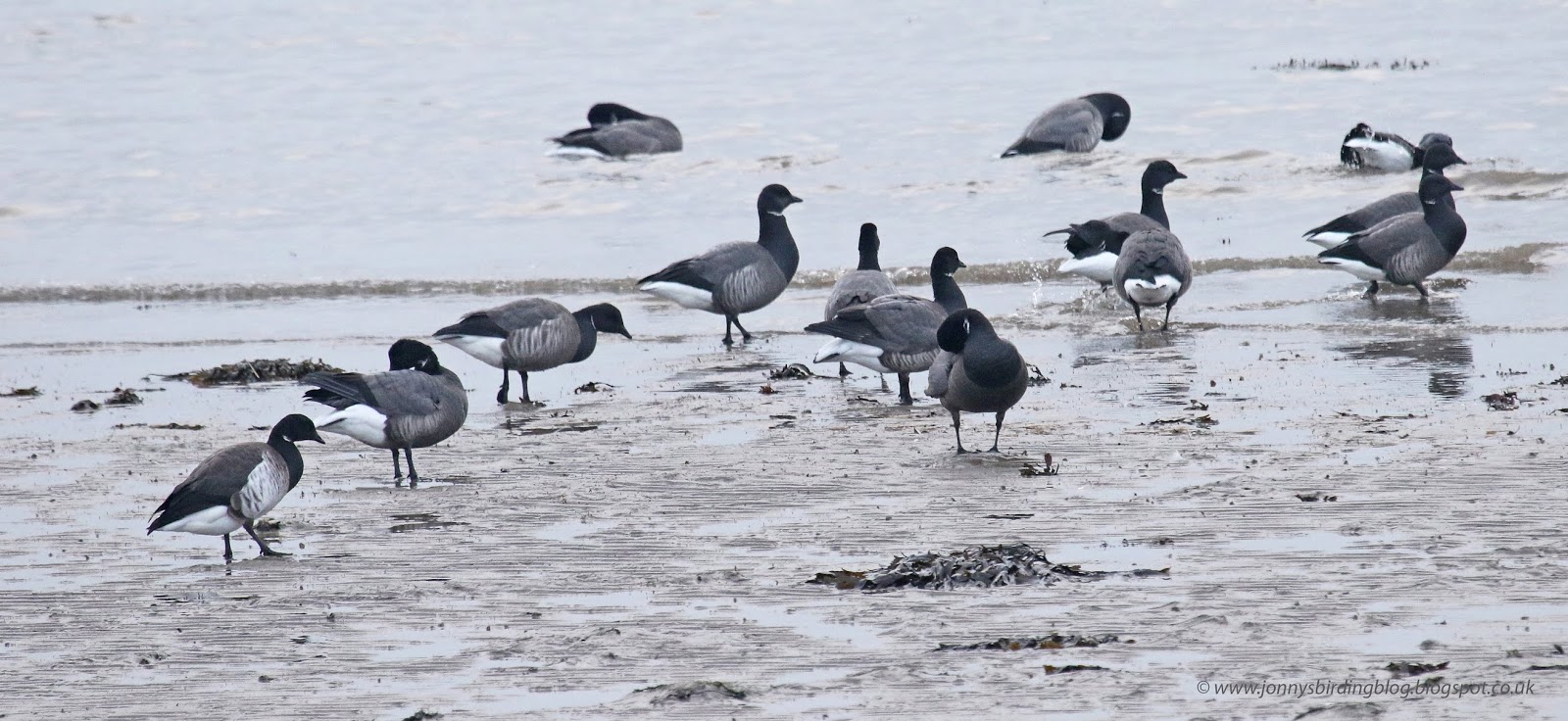
Looking from the Heugh, the tide was a bit high so the birds were scattered across the bay, but we did manage to pick up 6 Slavonian Grebes, 20 Long-tailed Ducks and 24 Red-breasted Merganser among others. A group of Dark-bellied Brent Geese was feeding in the harbour, with a few Pale-bellied mixed in too, and a Merlin and Peregrine were also seen.

Just as we were leaving the island, my dad noticed a pair of Long-tailed Ducks in the channel by the causeway, so I stopped the car, and was able to walk down to the water's edge while the ducks were below the surface. I was treated to some stunning views down to just a few metres before they flew off as the tide rose. We had lunch at Budle Bay, where the ever-present Spotted Redshank was feeding on the mud.

On arrival at Stag Rocks, one of the very first birds we looked at was another close in Red-necked Grebe, while our fifth of the day was further north off Budle Point. I definitely haven't seen five Red-necked Grebes in a single day in Northumbs before! A Great Northern Diver showed quite nicely if briefly, 5 Slavonian Grebes included one close bird, and 16 more Long-tailed Ducks were offshore.


Long-tailed Ducks
Pale-bellied Brent Goose with Dark-bellied Brents
Unfortunately my digiscoping eyepiece is away being fixed at the moment, so there may be some dodgy phonescoped photos on my blog in the next few weeks...

Red-necked Grebe off Holy Island

Sunday, 6 January 2019

Recent images


Shore Larks at Buston Links
Eurasian White-fronted Goose at Hesmcott Hill
Pink-footed Geese at Cresswell
Hooded Crow at Linton