Showing posts with label Great Northern Diver. Show all posts

Saturday, 26 October 2019

Back in the north...

This weekend I'm back at home from UEA, so today me and my dad decided to have a full day's birding on the coast. We chose (perhaps wrongly!) not to start in the Druridge area, and instead head north to look for seabirds.

Stag Rocks was quiet with just a single Great Northern Diver offshore and then a Red-necked Grebe just before we left. Budle Bay and Fenham-le-Moor were both busy with birds although we couldn't find anything out of the ordinary.

We continued north, ending up at Cheswick. Here we quickly picked up the drake Black Scoter, while a single drake Long-tailed Duck and a group of six Velvet Scoters were nice to see.

On the way back home we called in at Cresswell Pond to take a look at the smart juvenile/1st-winter Long-billed Dowitcher found earlier in the day. We had decent scope views of the bird but unfortunately it didn't land on the mud in front of the hide. The pond had a good selection of other birds too including a Little Stint, 4 Long-tailed Ducks, 5 Scaup and 5 Ruff.

Tomorrow I'll be heading back to uni and I hope to round up any bird sightings I have while there on my blog soon...

Black Scoter
Distant Long-billed Dowitcher at Cresswell - please view at 1080p

Saturday, 19 January 2019

A good day up north...

We fancied some sea birding and the calm, grey conditions encouraged us to head up to the north of the county. For a change we tried Holy Island to start with, and were surprised to see 3 Red-necked Grebes scattered around just off the harbour. I can't remember ever seeing three in a day before let alone in the same place...

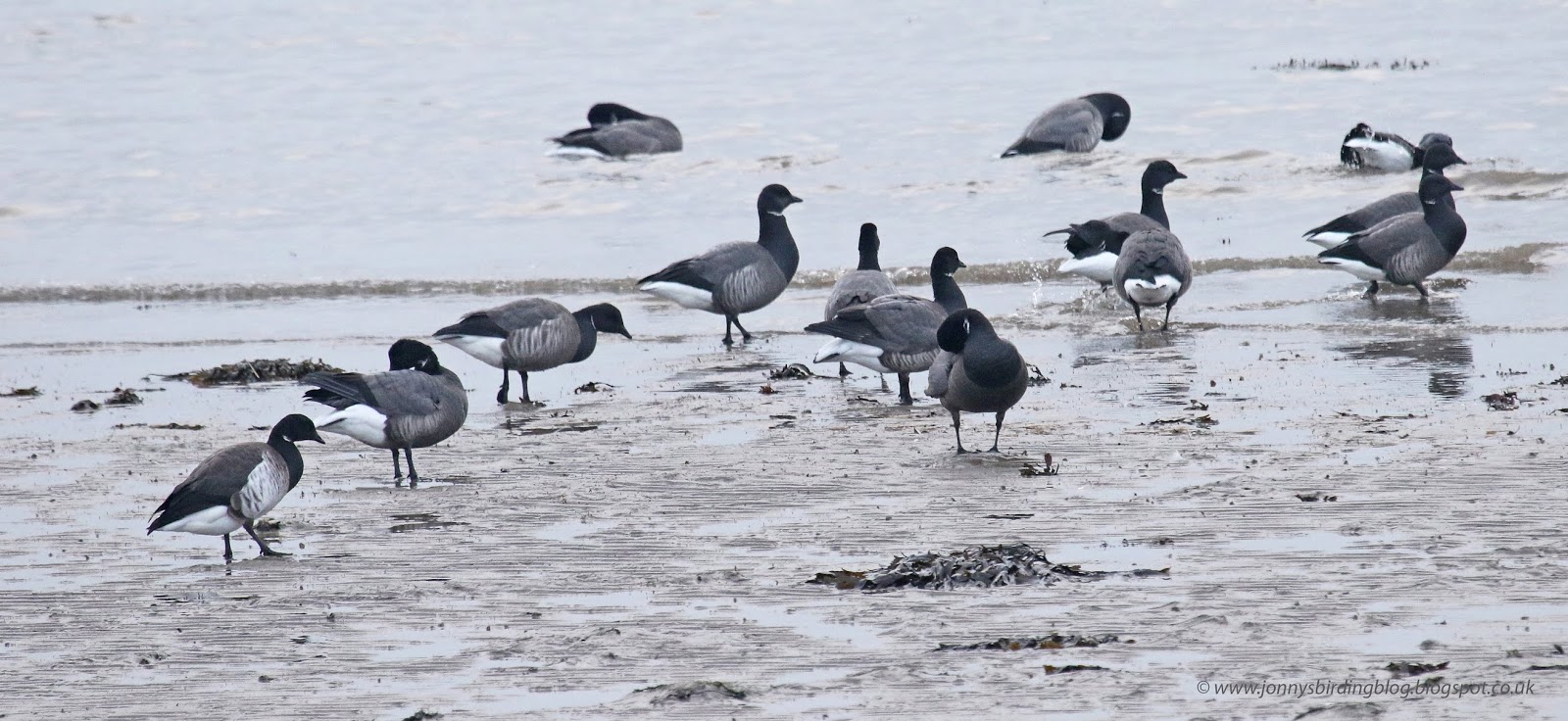
Looking from the Heugh, the tide was a bit high so the birds were scattered across the bay, but we did manage to pick up 6 Slavonian Grebes, 20 Long-tailed Ducks and 24 Red-breasted Merganser among others. A group of Dark-bellied Brent Geese was feeding in the harbour, with a few Pale-bellied mixed in too, and a Merlin and Peregrine were also seen.

Just as we were leaving the island, my dad noticed a pair of Long-tailed Ducks in the channel by the causeway, so I stopped the car, and was able to walk down to the water's edge while the ducks were below the surface. I was treated to some stunning views down to just a few metres before they flew off as the tide rose. We had lunch at Budle Bay, where the ever-present Spotted Redshank was feeding on the mud.

On arrival at Stag Rocks, one of the very first birds we looked at was another close in Red-necked Grebe, while our fifth of the day was further north off Budle Point. I definitely haven't seen five Red-necked Grebes in a single day in Northumbs before! A Great Northern Diver showed quite nicely if briefly, 5 Slavonian Grebes included one close bird, and 16 more Long-tailed Ducks were offshore.


Long-tailed Ducks
Pale-bellied Brent Goose with Dark-bellied Brents
Unfortunately my digiscoping eyepiece is away being fixed at the moment, so there may be some dodgy phonescoped photos on my blog in the next few weeks...

Red-necked Grebe off Holy Island

Sunday, 2 December 2018

Better than expected!

When we set off this morning we just hoped to catch up with the adult Bonaparte's Gull at Stag Rocks. We didn't think much else would happen but of course you never know with birding...

On arrival at Stag Rocks, the adult Bonaparte's Gull was the closest bird in the surf and provided some really nice views before it took of with a small flock of Black-heads, circled a couple of times and landed on the sea much further out.

We decided to start scanning the rest of the sea hoping for a grebe or Long-tailed Duck. From the parking area we could only pick up a single Great Northern Diver so we walked north to scan from the lighthouse. There were a couple of Puffins offshore as well as a Long-tailed Duck, but it certainly wasn't our most memorable visit at that point.

However, that changed when I picked up a large diver about half way out to our north-east. The view wasn't great with it slightly in silhouette but something about it demanded attention - I think it was the way it held its bill - exactly like how a White-billed Diver would. After a few seconds it turned to face a different angle and I saw what I thought was an unmarked yellowish bill.

My dad had a look through my scope and was also interested immediately. I rang SS and JWR who were looking from the top of the bank, and it turned out they also had briefly seen a large diver but left it as a Great Northern. However, on having closer views when they joined us by the lighthouse they also agreed that we had a found a White-billed Diver!

After a while, the bird made its way a bit closer and I managed to digiscope a few record shots before it drifted south and further out again. When at its closest the scope views were excellent and we were even able to easily pick out the white spotting on the back of the adult Diver. By the time we left, it was out towards the Farnes but did briefly spend some time alongside a Great Northern, providing a great comparison.

Other stuff offshore included 7 Long-tailed Ducks, at least 2 Great Northern Divers and 3 Red-breasted Mergansers while 145+ Purple Sandpipers were on the rocks. Just as we were leaving a group of 7 Snow Bunting flew south quite high.

Before heading home we made a detour to Newbiggin where a first-winter Red-backed Shrike had been found earlier in the day. We arrived to find it showing nicely around the tank blocks at Church Point, though it did look a bit bedraggled in the rain! This December record is unheard of in the county previously, and looking at birdguides it seems to be just the fourth December Red-backed Shrike since 2001.


Some videograbs along with the videos below...


White-billed and Great Northern Divers - videos should be watched in HD at 1080p


Bonaparte's Gull with Black-headed Gulls
First-winter Red-backed Shrike

Saturday, 10 November 2018

A successful day...

With a couple of reports of Black Guillemot at Cheswick last week, we decided that we would target catching up with one today as it was easily the commonest bird missing from our county list.

While the light wasn't great first thing, we gave it an hour or two on Holy Island. There was no sign of yesterday's Shore Larks but a Snow Bunting flew over and we did see 18 Twite and a Short-eared Owl.

Next we did head to Cheswick and parked by the railway bridge. We walked through the dunes and started scanning the sea, and it wasn't long before my dad did pick up a first-winter Black Guillemot about half way out. We watched it for a while, but once it started diving it was really difficult to get onto again.

Having not seen one (it?) for seven years, we also hoped to see the drake Black Scoter while we were here. As we walked north, we noticed a small group scoter just off Cheswick Black Rocks. Setting up the scope revealed the Black Scoter with some female Commons. We enjoyed some really good views of this bird - much better than we were expecting.

Other birds off Cheswick included a Great Northern Diver, Long-tailed Duck, Red-breasted Mergansers and a Goosander. 


Black Scoter - with female Common Scoters
Black Guillemot obviously!

Sunday, 28 October 2018

An exciting seawatch...

Yesterday we spent around seven hours at Church Point, Newbiggin. My target for the day was Pomarine Skuas and we sat through thunderstorms and hail without success. We did manage a nice selection of birds including a Little Auk, Red-necked Grebe and Sooty Shearwater, as well as 4 Scaup among large numbers of wildfowl. Birds in off included a Short-eared Owl and Woodcock.

Feeling a little bit frustrated about the lack of Poms, we decided to head back out this morning, and almost immediately we realised we were in for a better day. 3 superb Pomarine Skuas flew north inside the first ten minutes along with several Little Auks.

Over the next five hours or so, we had another 2 Pomarine Skuas including one superb adult very close in, and at 11:10 I picked up a Leach's Petrel going north about half way out. This was a lifer for me and a bird I've been wanting to see for a long time! Great stuff!

Here's some selected counts 07:15-11:40...

1 Leach's Petrel
5 Pomarine Skuas
37 Little Auk
24 Velvet Scoter
11 Manx Shearwater
1 Sooty Shearwater
6 Great Northern Diver
1 Black-throated Diver
25 Long-tailed Duck
1 Great Skua


Pomarine Skua

Thursday, 12 April 2018

Holy Island...

Yesterday we headed to Holy Island for our first day of migrant-hunting this year. After easterly wind and drizzle overnight, we hoped there would be a few early migrants such as Ring Ouzels, but it turned out to be a bit quiet, only picking up in the afternoon when 2 Black Redstarts were below the Vicar's Garden and a smart Great Grey Shrike was on the Snook - my first in spring. 3 Slavonian Grebes were also showing well offshore, with two starting their moult into summer plumage. Sadly, despite much searching, we were unable to locate the Black Scoter...

1 Great Grey Shrike
2 Black Redstarts
3 Slavonian Grebe
5 Great Northern Diver
1 Short-eared Owl
1 Merlin
1 Woodcock
10 Robin
13 Blackbird
6 Song Thrush
14 Redwing
1 Fieldfare
4 Chiffchaff
1 Goldcrest
1 Blackcap
1 Wheatear
2 Brambling
350+ Bar-tailed Godwit
5 Black-tailed Godwit
28 Sandwich Tern


Great Grey Shrike
Slavonian Grebe

Sunday, 4 February 2018

A day of twos...

This morning we had another decent day in the bay, there's always just enough to keep us going back. And, for some reason, there seemed to be two of all the highlights today...

Our first stop this morning was Chevington, which was very quiet for us, with the only bird of note being the long-staying Long-tailed Duck. We decided not to bother with the south pool today, and headed south towards Druridge Pools, via Widdrington Moor Lake.

At the latter, one of the Great Northern Divers was still diving in the south-west corner and the many gulls included 2 smart Mediterranean Gulls - a first-winter and a second-winter and our first of the year. 

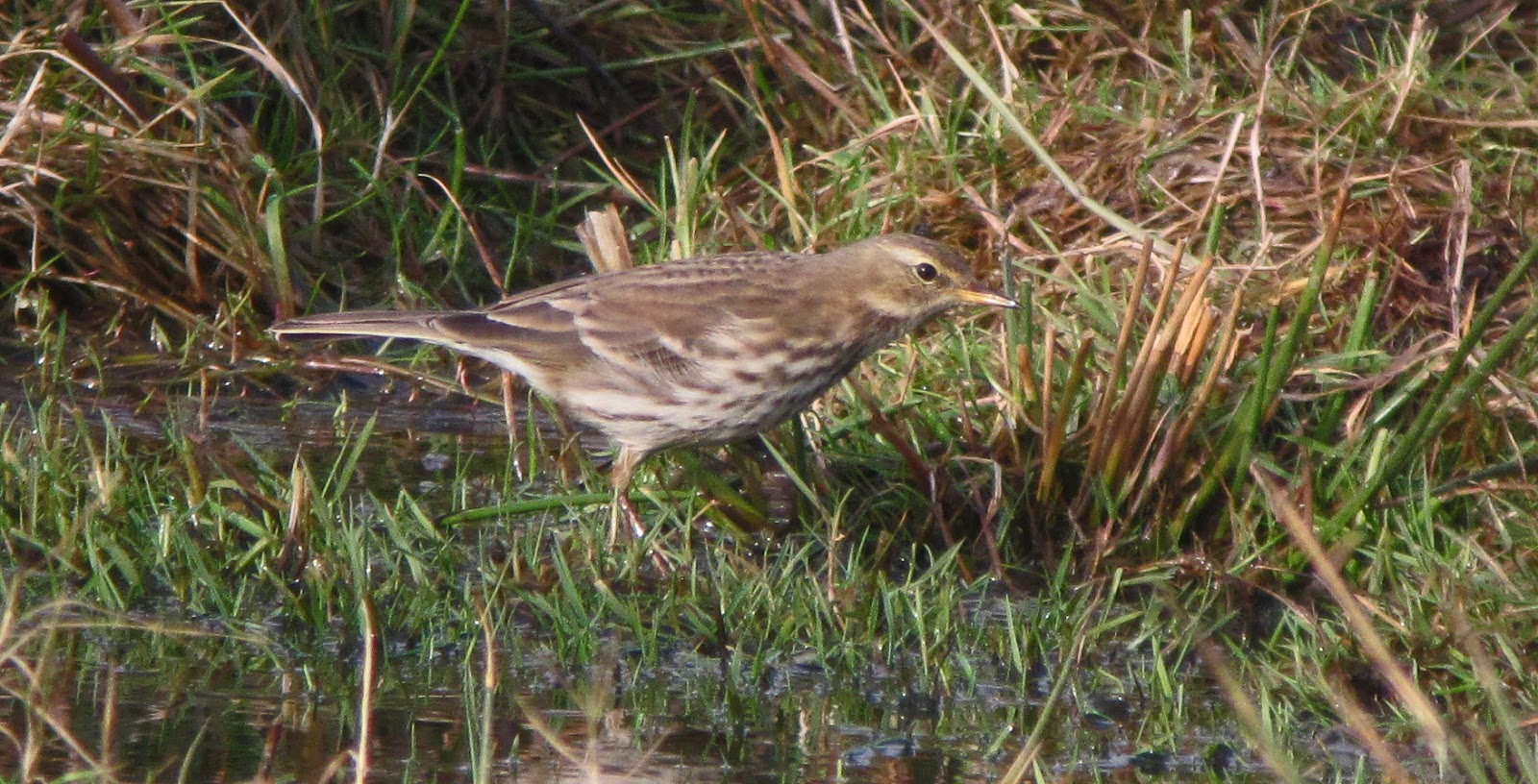
On arrival at the Budge Screen it was initially quite quiet, but a scan of the ducks revealed the hybrid American x Eurasian Wigeon feeding on the far bank, as well as 4 Black-tailed Godwits. All of a sudden 2 Water Pipits took flight and flew off west, and we thought that would be the last we'd see of them, but it was nice when they both returned, and one even showed really well.

We moved on but not very far as it seemed as though the fields around Hemscott Hill were full of Pink-footed Geese; in fact we estimated over 4000. Pulling over to scan them, the first birds I got onto, and in the closest group were 2 nice adult Greenland White-fronted Geese. A short while later I picked up 2 Eurasian White-fronts in another field, and it was good to be able to compare these.


Water Pipit
Curlew
And our final paired highlight were these 2 Tawny Owls, my first proper views on the ground...


Thursday, 4 January 2018

2018 underway...

We're four days into 2018 and me and my dad have already spent a couple of days out on the coast. On the first we spent the day on the patch, managing to see 77 species. The main highlight was a Waxwing which flew south past us in the dunes before spending a bit of time around the burn mouth. Other sightings included a Long-tailed Duck, Merlin and 31 Whooper Swans.

This morning we fancied a bit of a change so headed north towards Bamburgh. When we arrived at Stag Rocks the sea conditions looked perfect - flat light and flat water. The birds were very visible including:

1 Red-necked Grebe
7 Slavonian Grebe
79 Long-tailed Duck
3 Great Northern Diver 
3 Red-throated Diver 
c. 30 Common Scoter

108 Purple Sandpipers were also on the rocks. The usual Spotted Redshank was also in Budle Bay. At Fenham Flats the usual great numbers were out on the mudflats, and 215 Pintail was our highest ever count. A pale redpoll outside the hide with 3 Lessers eventually turned out to be a Mealy Redpoll.

Waxwing


Mealy Redpoll

Sunday, 12 November 2017

More decent seawatching!

We've had a good run of seawatching this year with highlights up to today including Cory's Shearwater, Sabine's Gull, Storm Petrel and two White-billed Divers. We weren't as hopeful about today when we set off this morning, but were pleased to be proved wrong in the end!

We decided to start at Hadston Carrs and it wasn't long before we had our first Little Auk of the morning heading north. We stayed for two hours but it was pretty quiet with the highlight perhaps being a single Snow Bunting flying north past below the small cliff. Here's the totals for Hadston (09:30-11:30)...

2 Little Auk
10 Goldeneye
1 Long-tailed Duck
1 Little Egret
1 Snow Bunting
1 Great Northern Diver
3 Red-throated Diver
2 Great Crested Grebe

We then took a break for lunch and checked a quiet Druridge Pools before deciding to have another look at the sea from Snab Point. With rougher seas and the wind coming more from the north, our two and a half hours here were much more productive.

There were a few more Little Auks passing now and I got onto a distant Grey Phalarope which kept on disappearing behind waves. A second-winter Glaucous Gull suddenly appeared over the rocks and was close enough to make out the pale iris through binoculars. The Grey Phalarope reappeared much closer feeding in the surf and a second more distant bird flew north at speed shortly afterwards. After one had been seen earlier I was pleased to now be able add it to my finds list. Another finds tick for me came shortly afterwards when I picked up a lark flying straight towards us at distance. Despite the long range, its pale face was visible and as it got closer we could see that it lacked a white-trailing edge to the wings, confirming it as a Shore Lark.

It quietened down shortly after this but just as we were about to leave a Little Auk appeared flying over the rocks before landing in a rock pool, and I was able to get within a couple of metres of it,  providing easily my best ever views! The totals from Snab Point 12:45-15:20 were as follows...

2 Grey Phalarope
16 Little Auk
1 Glaucous Gull
1 Slavonian Grebe
1 Great Skua
1 Manx Shearwater
3 Goldeneye
1 Goosander
1 Grey Plover
1 Shore Lark


Little Auk - second photo taken on my phone without any zoom!

Sunday, 29 October 2017

Northerlies deliver!

We set out to Newbiggin this morning with quite high hopes as the pressure charts for the previous night looked quite good. However, when we arrived it was a bit quiet with just a couple of Manx Shearwaters and Great Skuas going past. An hour and a half later we were even contemplating going somewhere else when we saw that a White-billed Diver had been seen passing Whitburn.

Over the next twenty minutes or so reports filtered in of a bird passing a number of sites in Tyneside. It was at around 10:57 that my dad picked up a diver coming north.

The bird was more distant than we were expecting, although the sun caught it and revealed the ivory yellow bill of my first ever White-billed Diver, and with its head and neck appearing all black, this bird was still in its summer plumage. We were really pleased to see it despite it being a lot further out than we had hoped for.

However, twenty minutes later I got onto two more divers going north and realised that alongside a Great Northern Diver was another White-billed Diver. This WBD was in winter plumage and was incredibly close in providing some awesome scope views and a great comparison to the Great Northern next to it.

It quietened down again after this although at 12:45 I picked up a European Storm Petrel about half way out, which was my first on a seawatch. The sea was relatively calm so some more good scope views were had.

Here's our full totals for 08:30-13:30...

2 White-billed Diver
1 European Storm Petrel
17 Goldeneye
7 Long-tailed Duck
6 Red-throated Diver
34 Common Scoter
2 Manx Shearwater
3 Great Northern Diver
11 Whooper Swan
3 Great Skua
3 Red-breasted Merganser
1 Arctic Tern
1 Goosander
5 Mallard
1 Velvet Scoter
9 Teal

The second White-billed Diver - © Chris Barlow
The best I could manage (White-billed on the left, Great Northern on the right)
Arctic Tern
Also a few other bits from the last week...

Two of three Velvet Scoter off Chevington.
Shore Lark and Snow Buntings at Chevington


Yellow-browed Warbler calling near Snab Point

Wednesday, 4 January 2017

A good start...

A slightly late post, but we managed to get the patch year list off to a great start on Sunday - seeing a total of 89 species throughout the day. Out first stop was Hadston Carrs where a half hour seawatch resulted in a Long-tailed Duck and Great Northern Diver.

When we pulled up at Chevington the 7 Shore Lark flew over the parking area, while the north pool held a moulty drake Scaup and a scruffy drake Red-breasted Merganser. We were also really pleased to get a flight view of a Bittern - a species which completely eluded us last year.

Druridge Pools produced a single Ruff and Black-tailed Godwit, while the Hen Harrier was once again patrolling the area.

Another nice surprise was a juvenile Glaucous Gull which I picked up flying in off the sea over Hemscott Hill. It cirlced a couple of times before flying back out to sea again. 7 European White-fronted Goose were with the Pink-feet just north of Cresswell. A return visit to Chevington produced 5 more White-fronts flying over north.

PWC 2017
Species: 89
Points: 106

Wednesday, 28 December 2016

A venture up north...

We fancied a change of scene today so decided to head up north to Stag Rocks and Bamburgh for a day of birding in that area. Budle Bay was quiet with only a Merlin in the dunes at the back and a Little Egret fishing in the main channel, so we headed up to Ross Sands for a bit of a walk. A number of Long-tailed Ducks and a couple of Slavonian Grebes were visible towards Holy Island.

Fenham Flats produced around 15 Pintail and the usual good numbers of Pale-bellied Brent Geese. There were really good numbers of seabirds off Stag Rocks especially the 75+ Long-tailed Ducks which were mostly made up of stunning adult drakes. Other birds off here included 9 Slavonian Grebes, 3 Great Northern Divers, 7 Red-breasted Mergansers while 76 Purple Sandpipers were on the rocks.

With an hour of daylight left we decided to call in at Chevington on the way home. Despite no sign of the Bittern was still really nice selection. The Hen Harrier gave a couple of really close fly pasts, while a Kingfisher sat in the reeds, 4 Water Rails were running about in the reeds and 2 Woodcock flew over in the last of the light, providing me with probably my last patch year tick of 2016...

PWC 2016
Species: 170
Points: 237

Pale-bellied Brent Geese
Pintail

Sunday, 30 October 2016

They don't get much better...

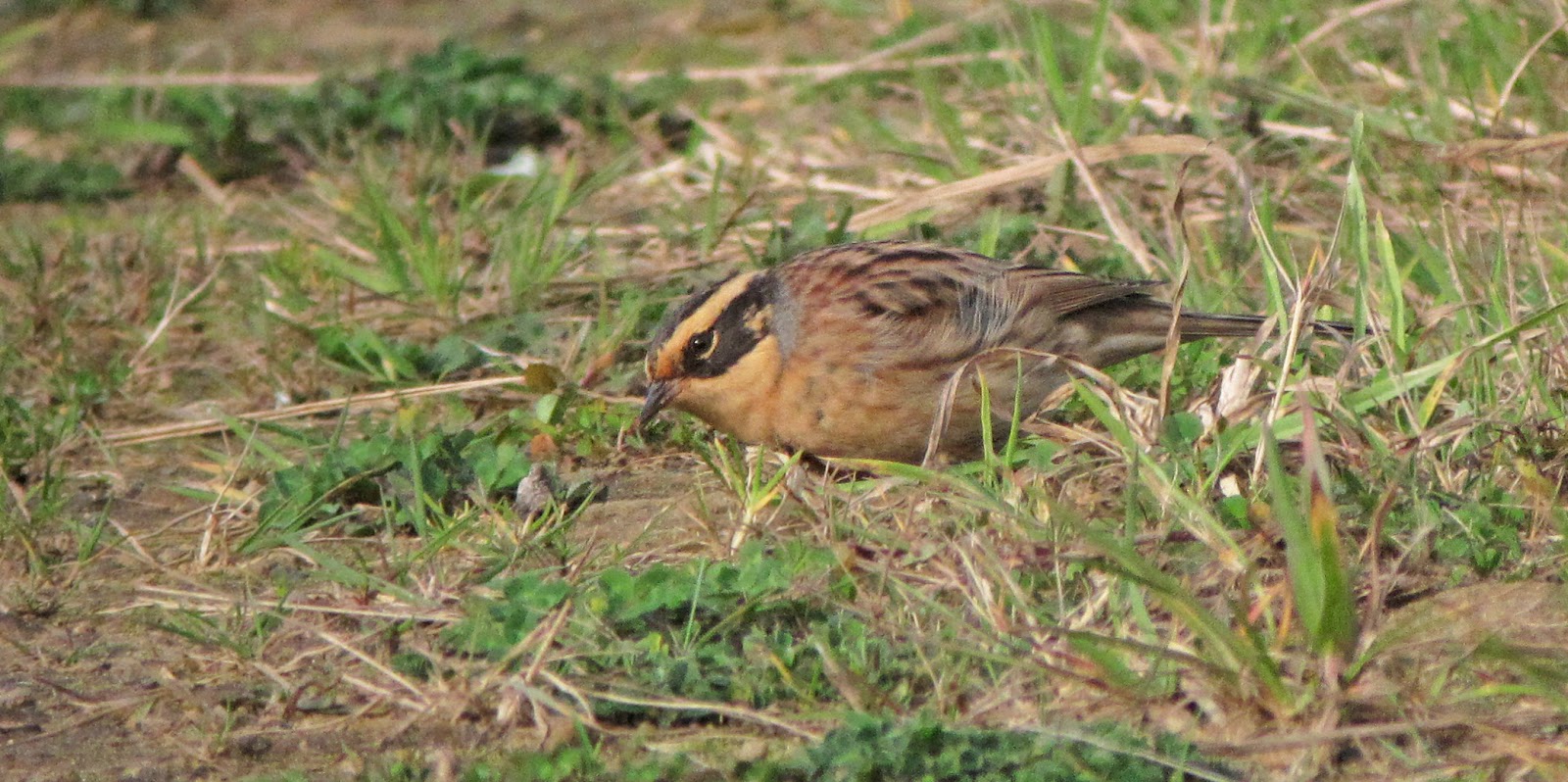
After an anxious wait of about an hour and a half this morning, eventually the stunning SIBERIAN ACCENTOR appeared feeding on the its favoured track. While everyone stood still the bird would happily work its way along the path to within about ten metres of the crowd, and not only did it become extremely close, the sun was also out and the Accentor was in really bright, smart plumage. What a bird!! A Great Northern Diver also flew over high, heading inland while we were there, and a Great Spotted Woodpecker was in the bushes.


Videos best viewed in HD at 720p/1080p

Wednesday, 3 August 2016

Iceland - The birds

We saw a total of 40 species of bird in Iceland and I've decided to write a mini trip report about them here...

Whooper Swan: Relatively common, seen on a number of rivers including a group of 30+ on the River Ölfusá. One individual at Tjörnin (Reykjavik) throughout our stay.

Pink-footed Goose: One at Tjörnin Lake (Reykjavik) on 25th.

Greylag Goose: Common.


Mallard: Common on coastal lakes.

Wigeon: One at Tjörnin Lake (Reykjavik) on 25th.

Tufted Duck: Breeding on Tjörnin Lake (Reykjavik).

Scaup: Several females with young on Tjörnin Lake (Reykjavik) along with a few other adults.


Eider: Three seen in Reykjavik old harbour on 25th and common on the coast between the city and Keflavík.

Harlequin Duck: Female with four chicks on the River Sog near Steingrímsstöo power station on 27th.


Red-breasted Merganser: Females with young seen on Tjörnin Lake (Reykjavik) as well as Lake Pingvallavatn.


Great Northern Diver: Numerous adults including some with young seen on the River Sog (27th) and Lake Pingvallavatn.


I think the adults were one of the best looking birds I've ever seen.
Fulmar: Numerous offshore and a few seen around high cliffs a few miles inland. One 'Blue' Fulmar seen on the whale watching trip out of Reykjavik on 25th.


'Blue' Fulmar

'Light' Fulmar
Gannet: A few offshore in Faxaflói Bay from the whale watching boat on 25th.

Cormorant: One in Flaxaflói Bay from the whale watching boat on 25th.

Merlin: Four seen around the River Sog on 27th; a lone adult male followed by three juveniles later in the day.

Ringed Plover: One at Vatnsmyri (Reykjavik) on 25th.

Golden Plover: Common around inland moors.

Dunlin: One at Vatnsmyri (Reykjavik) on 25th.

Redshank: Common on coastal pools.

Black-tailed Godwit: Two near Lake Pingvallavatn on 26th and flying over the lake in 27th.

Whimbrel: Common away from the coast. One even seen sitting on a lamp post!

Snipe: Several drumming at Vatnsmyri (Reykjavik) on 25th.


Red-necked Phalarope: Seen on several roadside pools including a group of 25+. Seven at Pingvellir National Park on 26th.

Arctic Skua: Three seen in Faxaflói Bay from the whale watching boat on 25th. Also four inland around the River Sog on 27th.

Black-headed Gull: Common.

Kittiwake: Common around the coast.

Herring Gull: One near Keflavík on 24th and one over the Blue Lagoon on 28th.

Lesser Black-backed Gull: Common.

Arctic Tern: Very common, frequently breeding around people.

Sat in the local park in Reykjavik
Puffin: Common offshore.

Guillemot: Two in Faxaflói Bay from the whale watching boat on 25th.

Feral Pigeon: Common in Reykjavik.

Meadow Pipit: Common.

White Wagtail: Common in Reykjavik.

Icelandic Redwing: Common around any area of vegetation.
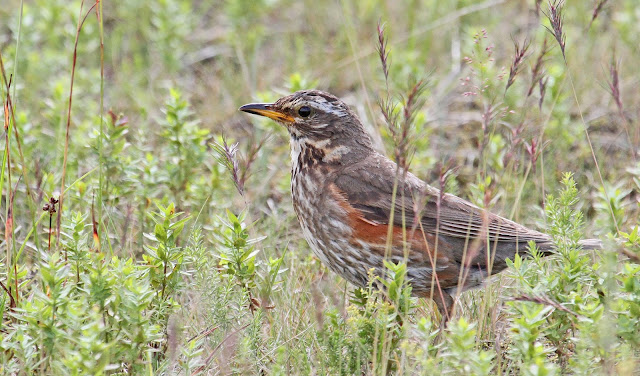


We found that the Icelandic race was notably darker underneath than the race we get in Britain.
Blackbird: One in Reykjavik on 26th.

Wheatear: Two near Lake Pingvallavatn on 26th.

Raven: Common away from coast.


Starling: Common.