Showing posts with label Knot. Show all posts

Tuesday, 30 March 2021

Bothal waders...

It was nice to round off my 5 mile list with a Knot on the east side of Bothal Pond on Friday, especially as it gave some really good views close to the hedge on the south side. Just the second one I've seen there in 10 years of regular visits. The long-staying Spotted Redshank was present too. 

Saturday also gave a final surprise with an Osprey over Morpeth...


Knot


Spotted Redshank (with Common Redshank in the last photo)

Osprey

Monday, 12 August 2019

Images from Spurn...

Thanks to the Cameron Bespolka Trust, last week I attended the BTO Young Leaders course at Spurn Bird Observatory. It was a great four days with a mix of talks, activities, and of course some birding. A full write up will appear elsewhere on the web in due course, but for now here's a few of my bird photos from the trip...


White-rumped Sandpiper

Wood Sandpiper


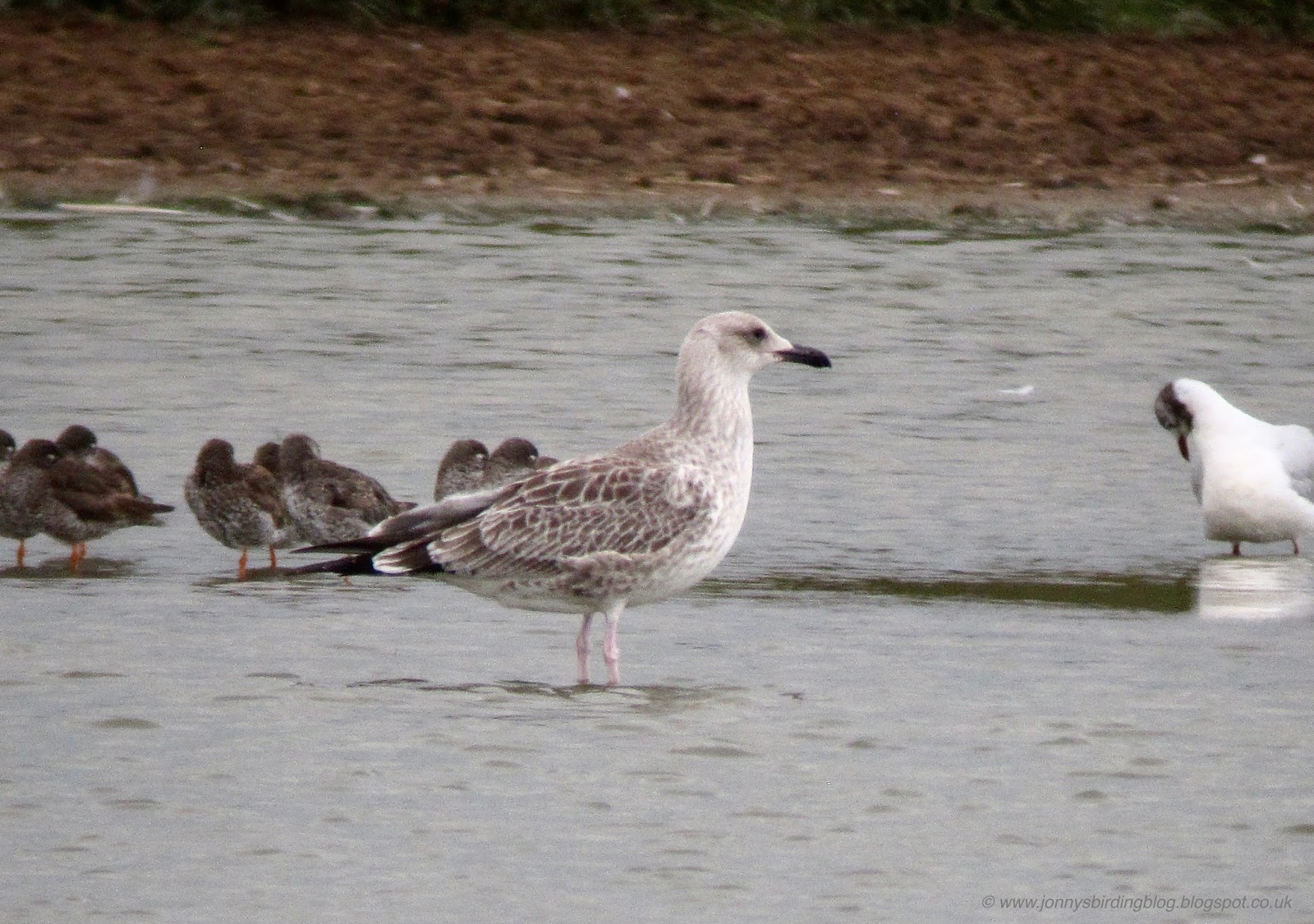
Juvenile Caspian Gull
Knot - the wader numbers at Kilnsea Wetlands were seriously impressive!

Monday, 28 May 2018

More Holy Island...

Yesterday morning we visited the patch, and the coal road pools were still really good with the waders including Pectoral Sandpiper, Greenshank, Knot and Little Stint, and the Glossy Ibis and 2 Whooper Swans were also around still.

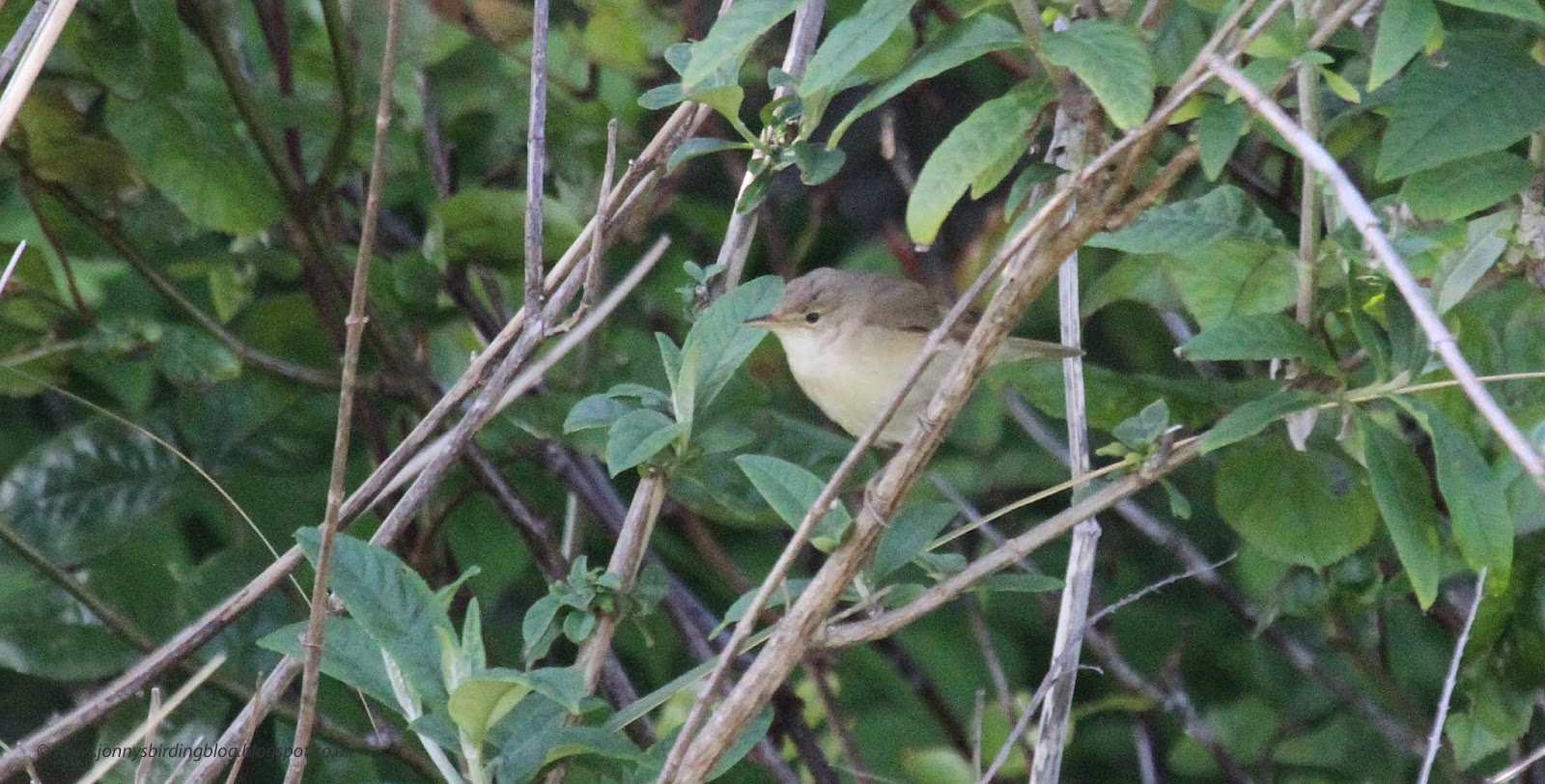
On the east edge of Druridge Bay Country Park, we discovered an unusual warbler singing from some thick scrub. Despite being there for around an hour, it never showed itself, and we were not sure of its identity. This morning I've had the chance to go through some of my recordings, and along with some advice from others, we are almost certain it was a Marsh Warbler, albeit not in full song.

After having some lunch, we decided to get back out and make the most of the good weather and good birding, so we headed back up to Holy Island, as a number of good birds had been reported from there.

The Vicar's Garden was the first place we looked, and eventually the Marsh Warbler there did show itself quite well, although wasn't singing. After seeing 3 Whimbrel fly over, we walked round to the Crooked Lonnen, and the male Red-backed Shrike was sat on bushes and fences to the north. A great looking bird and my first spring Red-backed Shrike in the county since 2013!

Next we walked up the Straight Lonnen, and our third Marsh Warbler of the day was singing in a hawthorn just to the north-east. Although harder to see than the one on the Vicar's Garden, this bird did show occasionally.

Just south of the Excavations we discovered a Whinchat and 3 Wheatears, and eventually located a female Red-backed Shrike sitting unobtrusively on some hawthorns.

With a Red-breasted Flycatcher, 2 Marsh Warblers, 2 Red-backed Shrikes, Icterine Warbler, Pied and Spotted Flycatchers and a Whinchat, the last two days on the island have been really good, and reminded us just why the island is such a good place to go birding!


Marsh Warbler in the Vicar's Garden
Marsh Warbler singing north of the Straight Lonnen

Male Red-backed Shrike (phonescoped)
Female Red-backed Shrike
Whinchat
Skylark

Wednesday, 30 August 2017

Pec double

I mentioned to my dad as we were leaving home today that I'd like to find a Pec Sand in the area as there had been quite a few reports from other counties recently, although didn't actually have very much hope...

Our first stop was Hauxley where a few hours produced a good count of at least 108 Black-tailed Godwits, as well as 2 Ruff, a Common Sandpiper and a Knot among the more usual waders. The Estuary at Amble held 77 Black-tailed Godwits which included a lot more adults than at Hauxley, so it is possible that there are some very large numbers in the area. One was colour-ringed, and a Kingfisher and 6 Goosanders gave good views, while the injured Whooper Swan was visible towards Warkworth.

Next we headed to Druridge Pools and were pleased to see our first juvenile Curlew Sandpiper of the year when we arrived, as well as a Greenshank, 5 Ruff and 30+ Dunlin. We walked around to the south facing hide and gave it about twenty minutes. We were just getting ready to move on when I decided to have a last scan of the far edge looking back towards the screen.

I noticed a bird feeding alongside a Redshank which I thought looked interesting - it was slightly larger than a Dunlin with quite a pot-bellied look and I thought I could see a sharply defined dark chest - although the views were very distant, which combined with the heat haze to make confirming it impossible. I headed back down the path to view from the NE corner but there was no sign.

On reaching the screen again I set the scope and started scanning the Dunlin and was pleased to see a really smart juvenile Pectoral Sandpiper feeding among them. I then realised the bird stood next to it was another Pec Sand! The first time I've seen more than one together, and a very welcome set of bonus points for Patchwork Challenge!

Cresswell was quieter with 8 Black-tailed Godwits, 2 Little Egrets and a Yellow Wagtail.


Pectoral Sandpipers - video should be viewed in HD at 720p/1080p


Curlew Sandpiper - video should be viewed in HD at 720p/1080p


Goosander

Stonechats
Willow Warbler

Friday, 26 August 2016

Quiet on Holy Island...

Back up to Holy Island this morning with the overnight rain and light south easterlies, however these once again failed to produce a scarcity. Here's the migrant counts...

11 Willow Warbler
2 Whitethroat
1 Spotted Flycatcher
1 Redstart
1 Goldcrest
1 Chiffchaff

Other highlights included a flock of at least 150 Goosander visible off the north shore of the island from the Excavations and an Osprey sat on the Pilgrim's Way marker posts with a fish.

We took a slight detour on the way back and stopped at Budle Bay where the highlight was 2 Spotted Redshanks (a moulting adult and a juvenile). Other birds included 7 Black-tailed Godwit, an adult Mediterranean Gull, a Pintail, Knot, 3 Little Egrets and 2 Goosanders.
 

Saturday, 20 August 2016

More Curlew Sands...

Holy Island was our first stop this morning though it was very quiet with just a single Pied Flycatcher and 8 Willow Warblers, so we headed to Druridge Pools.

As soon as we arrived in the Budge Screen it started pouring down although the birds more than made up for the miserable weather. There were 9 Curlew Sandpipers which included an adult in mostly winter plumage as well as 2 Little Stints, 20+ Ruff, 8 Black-tailed Godwit, a Common Sandpiper and a Yellow Wagtail. 6 Knot also made a brief appearance. We're really enjoying having so many waders here.

Pied Flycatcher

Friday, 19 August 2016

Waders still on the up..

3 Curlew Sandpipers at Cresswell Pond this morning were our first in Northumberland since September 2014 and we beat our record county Little Egret again with 16 at Cresswell this morning along with 25+ Black-tailed Godwit (several flocks flew over without stopping), 2 Knot, 4 Greenshank, 3 Common Sandpiper, 2 Avocet, a Water Rail and a Mediterranean Gulls also at the pond. A large flock of Black-headed Gulls visible in the distance from the car parking area held at least 30 more Mediterranean Gulls.

One of the first birds I looked at from the Budge Screen was a Wood Sandpiper in the north-east corner of the Budge Fields and it disappeared into the grass after a few seconds. We later walked along the path to the two hides and saw the Wood Sand again from here While we were stood here a Sparrowhawk flew over flushing the waders, most of which landed back on the fields, so we headed back to the screen. There were now 4 juvenile Little Stints walking around together (although quickly split up again), at least 22 Ruff, 25 Dunlin, 4 Black-tailed Godwits and a fly over Greenshank. It's amazing how many waders can stay invisible in the tussocks. We were also quite surprised to see a female Goosander land in front of the Budge Screen. They occasionally visit the big pool but we've never seen one actually on the Budge Fields before! 3 Common Sandpipers on the north pool were our first on the ground on the patch this year.

Our final stop was Castle Island where the water levels were unfortunately back to normal, though there was still good numbers of waders including a Curlew Sandpiper, Little Ringed Plover, Green Sandpiper, 29+ Black-tailed Godwit and 6 Common Sandpipers along with 6 Little Egret.

PWC 2016
Species: 152
Points: 199


Two of the Curlew Sandpipers at Cresswell
Goosander - unusual habitat!

Wednesday, 17 August 2016

Waders on the move...

Our first stop was Chevington this morning to look for terns at the burn mouth but unfortunately the beach was tern-free and the north pool. Sadly the water level looks to high here to attract any rarities this autumn.

Druridge Pools is looking much better and today there were 6+ Ruff (there had been 10 yesterday evening), 8 Black-tailed Godwit, flyover Greenshank and Yellow Wagtail as well as a Goldeneye on the big pool. We were also a bit surprised to see a flock of 7 Pintail drop onto the big pool. They had a short bathe before flying off north - fresh in?

Cresswell Pond once gain held 7 Little Egrets however today this included a colour-ringed bird (photo below) as well as 2 Greenshank and 9 Avocets. 5 juvenile Black-tailed Godwits dropped in and a flock of 5 Whimbrel appeared to come in off the sea before flying south over the hide.

The day's highlight as Castle Island where the water levels were the lowest we've ever seen them. With the low water levels came the waders with a minimum of 46 Black-tailed Godwits, 6+ Ruff, 4 Common Sandpipers, a Knot (which we were told was the first here for twenty years!), a Green Sandpiper, a Little Ringed Plover and 2 Avocets among the commoner species. Little Egrets were also out in force with a total of 14 birds being my highest ever count in Northumberland.


Pintail

Juvenile Cuckoo
Colour-ringed Little Egret

Sunday, 31 July 2016

Local birding...

Spent the morning on the patch where there is signs of autumn migration getting underway...

The vegetation at Druridge Pools is starting to get quite tall and it was difficult to determine just how many Greenshank were present. Eventually we confirmed five different birds. These were new for the patch year list, as was a flyover Common Sandpiper.Other waders here included 2 Ruff (adult and juvenile) and a Black-tailed Godwit. 2 Little Egrets were also on the Budge Fields and 2 Goosanders were on the north pool, it seems to have been a good year for these on the patch. An adult Mediterranean Gull was with the Black-headed Gulls in the field to the west.

East Chevington was quieter with a singing Grasshopper Warbler and an Arctic Skua offshore along with 4 Little Terns.

The water levels at Cresswell Pond were looking great today and were proving very attractive to waders: 12 Black-tailed Godwits, 1 Bar-tailed Godwit, 1 Ruff, 1 Knot, 3 Common Sandpiper, 2 Avocets (including a colour-ringed immature) and lots of Dunlin and Curlew. 2 adult Mediterranean Gulls were sat on the west spit along with 3 Little Egrets and 2 Yellow Wagtail were near the causeway.

PWC 2016
Species: 148
Points: 193

Sunday, 10 January 2016

A productive patch...

Yet another windy day at Druridge yielded some good birds in the end starting at Druridge Pools...

The Budge Fields held lots of common birds but not much else, so we decided to have a look at the sea from the top of the big dune. Two Great Northern Divers which flew south quite close in shore were the highlight with a few other common birds added to the patch year list. Perhaps the most unusual record of the day was 10 Dark-bellied Brent Geese which I spotted in the flooded field just north of the turning circle. The first time I've seen Brent Geese on the ground in Druridge Bay! We could also see the female Marsh Harrier over East Chevington from here.

At Druridge Bay Country Park there was a steady stream of gulls dropping onto the lake in front of the boat ramp. The first interesting bird was an adult Little Gull, which was followed shortly after by the first-winter (?) Iceland Gull. An adult Mediterranean Gull circled the lake before flying off. 3 drake and a female Red-breasted Merganser were also at DBCP.

A smart drake Common Scoter was on the north pool at East Chevington along with 3 Scaup, 2 Red-breasted Mergansers and the Slavonian Grebe still.

A look at Hemscott Hill was very productive with an adult Mediterranean Gull and lots of waders...

1 Long-billed Dowitcher - very pleased to get it on the PWC 2016 list!
1 Ruff
2 Black-tailed Godwit
5 Bar-tailed Godwit
1 Knot
Redshank
Golden Plover
Dublin
Lapwing
Curlew

PWC 2016
Species: 89
Points: 106


Iceland Gull
Hemscott Hill

Wednesday, 23 December 2015

Midwinter Pipit

Finally after 8 years trying I managed a good view of a Water Pipit at Chevington this morning. It was present on the small flash at the south end early this morning. The bird was very mobile, often flying off to the pool at the burn mouth or flying towards the south end of the coal road. A Kingfisher put in a brief appearance flying from the burn mouth towards the south pool.

 The Slavonian Grebe was present on the north pool and 3 Pintail were on the Budge Fields. At Cresswell Pond the first-winter Long-billed Dowitcher remained on the west shore along with a Knot.

PWC 2015
Species: 177
Points: 243


Water Pipit
Slavonian Grebe

Wednesday, 23 July 2014

Recent sightings

On Monday we decided to have a look at East Cramlington Pond for dragonflies. There were plenty on the wing with at least 10 Ruddy Darters being the highlight. Plenty of Azure, Emerald and Blue-tailed Damselflies were also there.

Later in the day I had a cricket match in Corbridge, so we took the opportunity to have a look in Slaley Forest for Nightjars. Sure enough we heard and saw a couple of Nightjars, as well as Woodcocks and a Cuckoo. Barn and Long-eared Owls were also in the area.

At Cresswell on Tuesday there was: a Ruff, a Greenshank, 2 Common Sandpipers, 2 Little Egrets, 3 Knot, 6 Avocet, a Whimbrel and 10 Black-tailed Godwits. A Wood Sandpiper was on my patch, Bothal Pond.


Ruddy Darters


Emerald Damselfly


Azure Damselfly